
The One-Stop Beauty Tools Sourcing Guide
Introduction: The Quiet Cost of Five Factories
Five years ago, a typical beauty brand launch meant five purchase orders. A brush factory in Guangdong for the brushes. A pouch workshop in Zhejiang for the bags. A metalwork supplier for the lash tools and combs. A mirror assembler in Shenzhen for the vanity mirrors. A packaging converter for the gift boxes. Five supplier relationships, five quality manuals, five compliance packs, five communication rhythms. It was a procurement department's rite of passage.
This guide is for the buyer who has asked that question. It maps the cross-category OEM capability a one-stop beauty tools supplier can responsibly offer — from makeup brushes through hair brushes, makeup bags, lash tools and mirrors — and the three real value propositions that justify a one-stop model in 2026. It also identifies the four scenarios where one-stop sourcing genuinely beats multi-vendor, and the four where it does not.
Section 1: The Cross-Category OEM Capability Map
The first thing to be clear about: a one-stop supplier is not five suppliers hiding under one brand. It is a single manufacturing operation with shared quality systems, shared compliance documentation, shared color and finish standards, and shared account management — but distinct production lines, distinct tooling and distinct material expertise per category. The capability matrix below is what a credible one-stop partner looks like for the four accessory categories that most commonly pair with brushes.
| Category | Core Capability | Reference Page |
|---|---|---|
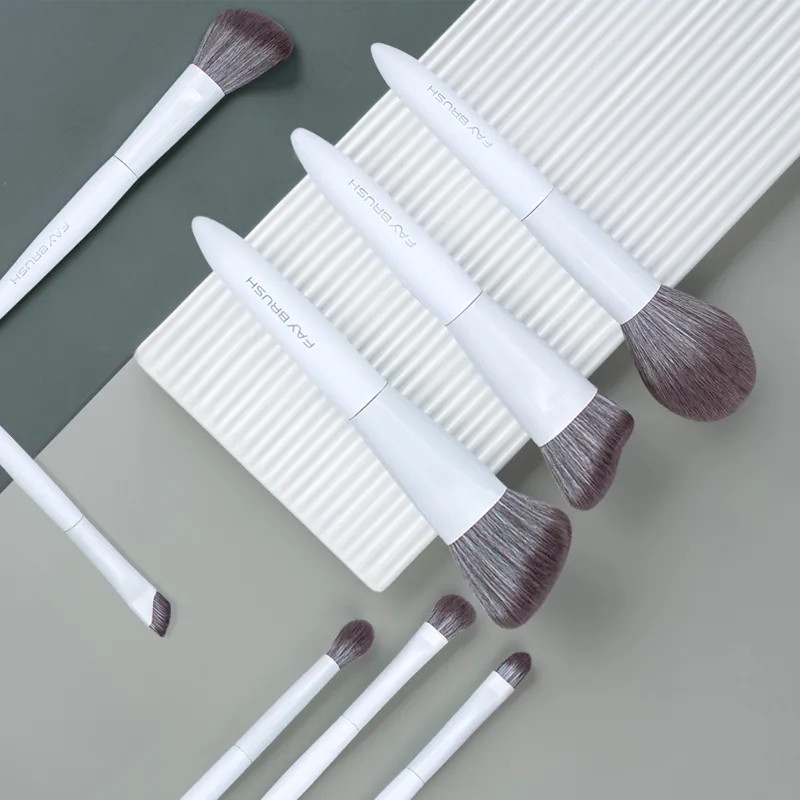
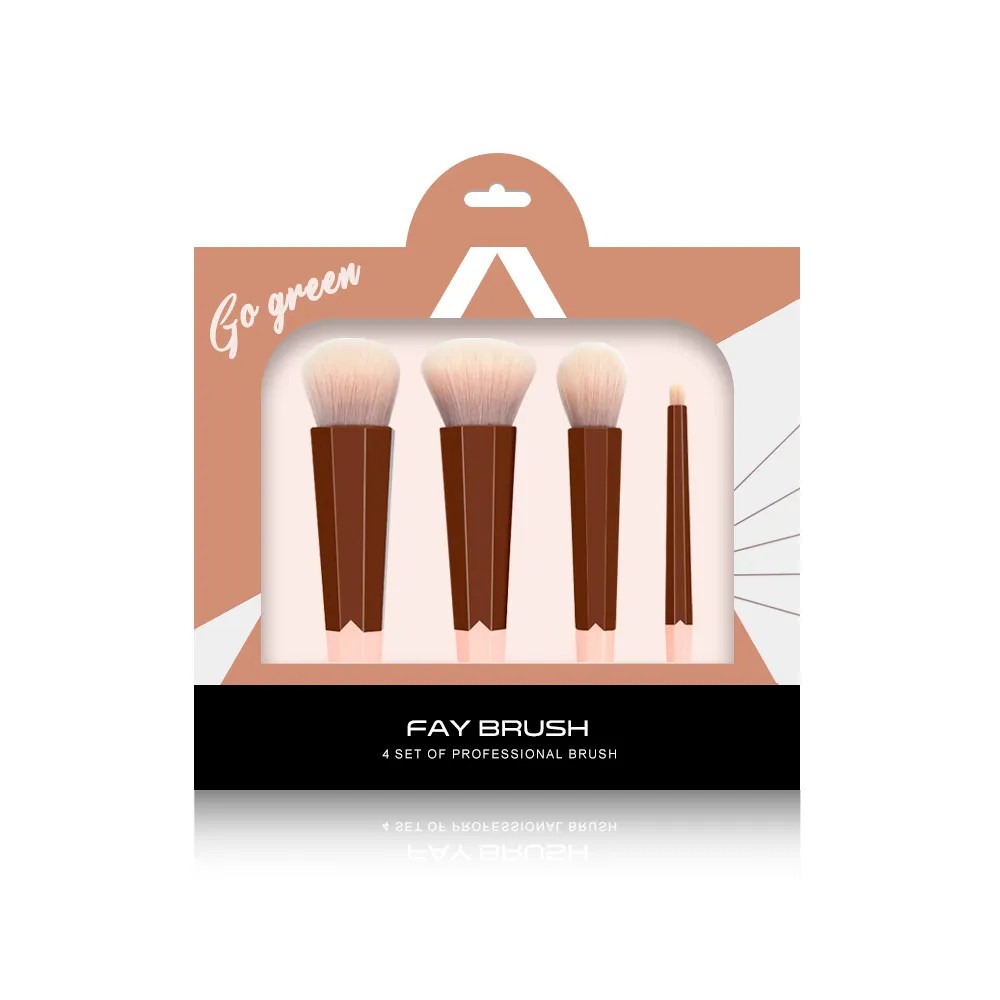
| Makeup Brushes | Bristle tufting, ferrule crimping, handle turning, laser engraving | faybrush.com |
| Hair Brushes | Cushion mounting, bristle implantation, handle finishing | /hair-brushes-factory.html |
| Makeup Bags | Material cutting, screen/digital/hot-stamp printing, sewing, hardware fitting | /makeup-bags-manufacturer.html |
| Lash & Brow Tools | Metal stamping, plating, spring assembly, moulding | /eyebrow-lashes-manufacturer.html |
| Makeup Mirrors | Frame moulding, mirror cutting, LED module assembly, battery integration, electronics certification | /makeup-mirrors-manufacturer.html |
A buyer who wants to test this map in practice should pick two SKUs from two adjacent categories — say, a brush and a hair brush, or a brush and a bag — and ask each supplier for a side-by-side quote. The exercise is not just about price; it is about how many separate document sets, certifications and email threads the multi-vendor route generates versus the one-stop route.
Section 2: The Three Real Value Propositions of One-Stop Sourcing
2.1 Cross-Category Visual Consistency
The single most underappreciated value of one-stop sourcing is finish consistency across product categories. A retail gift set that pairs brushes with a hair brush, a makeup bag, an eyelash curler and a vanity mirror has to look like one design language. That means:
- The champagne-gold plating on the mirror frame matches the gold tone on the eyelash curler and the gold zipper pull on the bag. Five factories produce five different golds. One factory produces one.
- The Pantone reference on the brush handle, the bag outer fabric and the mirror frame rubber pad all hit the same sample. Five ink systems, five screen meshes, five colour-matching sessions. One system, one set of lab dips.
- The wood or bamboo tone across a brush handle, a hair brush handle and a bag tag is from the same material batch. Five suppliers, five tones. One supplier, one batch.
2.2 A Single Compliance Pack
Multiplied across five factories, this becomes a project of its own. Multiplied across one factory with a shared compliance lead, it becomes a single document set that one person can update once when a regulation changes — and notify the buyer of the change in a single email. That last point matters: the 2026 ECGT Directive explicitly requires change-notification clauses in supplier contracts, because material substitutions silently invalidate earlier compliance claims. One factory makes that workflow possible. Five factories make it a full-time job.
2.3 A Single Communication Window
A brand's account manager is the person who knows the timeline, the colour, the component change, the last-minute sample revision and the partial-shipment decision. With five factories, that person is five different people in five different time zones, each with their own production schedule, holiday calendar and customer priority list. A change to the gold-tone specification becomes a five-thread coordination problem. A delay in brush samples becomes a brush-only problem even though the brush is sitting in a gift set next to a mirror, a bag and a lash tool.
One account manager across the program turns these into single-thread problems — and that is not just a convenience. It is the only realistic way to manage a Q4 launch where every week of slippage costs holiday-season revenue.
Section 3: Four Buyer Scenarios Where One-Stop Wins
3.1 Independent DTC Brand Launch
An independent brand launching its first product line is the clearest case for one-stop sourcing. The constraint is not just budget — it is knowledge.
A one-stop supplier supplies that knowledge as part of the relationship. The first RFQ is also a consultation, and the factory's compliance lead is on the call. That is the only way a first-time brand gets to market without learning five times the hard way. For the founder, the question is not whether to use one-stop — it is whether to spend the founder's attention on a five-vendor management problem or on building the brand. The answer is obvious.
3.2 Holiday Gift Set (Q4 and Beyond)
A holiday gift set is the most demanding product format a beauty brand ships. It combines multiple categories into one product, one ASIN, one barcode, one packaging compliance test. A Black Friday gift set that has a brush, a hair brush, a bag, an eyelash curler and a vanity mirror is a five-component product masquerading as one SKU. The retailer's onboarding form treats it as one. The packaging compliance test treats it as one. The shipping classification (HTS code) treats it as one.
Multi-vendor sourcing puts all of the integration risk on the buyer. Five factories ship on five timelines, and the assembler either waits for the slowest or absorbs the expedite fee. One factory ships one consolidated carton. The gift-set launch window — measured in weeks before Black Friday, not months — is too narrow for any other model.
3.3 Mid-Market Distributor Restocking
A mid-market distributor buying brushes for a retail chain typically has a stable SKU list, a stable colour palette, and a stable retail margin model. The risk is not innovation — it is disruption. A brush factory goes through a quality crisis; a bag factory has a labour audit failure; a mirror assembler loses its IEC certification. Each of these events has historically been a single-SKU disruption. With one-stop sourcing, the same event becomes a single-account event, and the account manager can redirect volume internally rather than triggering an emergency supplier search.
3.4 Tier-1 Retail New Line Launch
A Tier-1 retailer launching a new beauty line typically wants a single supplier audit, a single quality manual, a single social compliance audit and a single point of contact for the whole launch. That is a procurement reality, not a brand preference. The retailer does not want to schedule five SMETA audits; it wants to schedule one. One-stop sourcing aligns with how the buyer at the retail end is actually operating.
Section 4: Four Scenarios Where One-Stop Is the Wrong Choice
One-stop sourcing is not a religion. There are four scenarios where multi-vendor is genuinely the better answer, and a good one-stop partner will say so plainly.
- Single-category volume exceeds 1 million units per year. At that scale, dedicated line capacity and dedicated raw material contracts beat shared capacity. A one-stop partner should refer such buyers to specialist factories.
- The brand needs a category-leading specialist — for example, optical-grade cosmetic mirrors or hand-tied fibre brushes. These exist in factories that focus on one category and reject the breadth trade-off.
- Tariff or geopolitical dual-sourcing is required. Any brand with a US retail relationship has a hard reason to maintain at least one non-China supplier relationship for the largest-volume SKU. One-stop can be the primary, but a credible secondary is still prudent. Our supply chain diversification guide covers the dual-source model in detail.
- The brand has a fully internalised compliance team and wants each supplier to compete on price independently. For a Tier-1 brand with 30+ in-house compliance staff, multi-vendor keeps every supplier focused on its specific cost line. One-stop is less efficient at that scale.
Conclusion: One Factory, One Calendar, One Document Set
One-stop beauty tools sourcing is not a way to avoid specialists. It is a way to share the systems that should never have been separate — compliance, colour, quality, account management, calendar — across categories that have always been separate. For a 2026 B2B program, the trade-off is between the known coordination cost of five-vendor sourcing and the known breadth cost of one-stop sourcing. For most buyers building a gift-set, a launch line, or a one-stop brand, the first cost is now larger than the second.
The practical first step is a one-page RFQ covering all five categories at once, sent to two or three candidate one-stop partners. The response time, the documentation quality, and the colour-matching samples received back within 14 days are usually enough to identify which partner is real and which is selling the concept. For buyers who already have a relationship with a brush manufacturer that also runs the accessory categories, that conversation can start this week.
Makeup Brush Sampling Process: B2B Guide from RFQ to Production
Related Article

CONTACT US

+86 769 81900169

sales@faybrush.com

#172 Huancun Rd, Jinxiaotang Zhutang, Fenggang, Dongguan, 523681 China