
Double-Ended Makeup Brush Guide: OEM Spec, Failures, Design Trade-offs
Why Double-Ended Brushes Look Easy and Almost Never Are
A buyer sees a double-ended brush and sees two brushes for the price of one. A factory sees it and sees a longer ferrule, a second gluing station, a different balance point, and a packaging insert that no longer fits the standard slot. The economics that look great on paper are decided by what happens at the second end.
The market is real. Double-ended eye brushes, dual-purpose foundation-and-concealer brushes, and travel-size dual-head tools have all grown materially since 2022 — driven by TikTok "two-tool" routines, travel-kit demand, and the rise of minimalism-led brand aesthetics. But the SKU category also has a 30–40% rate of underperformance on the shelf for the wrong reasons. Most of those reasons are engineering reasons that show up long before the brush reaches a customer.
This guide is the OEM specification, the construction trade-off map, the seven real failure modes, and the design decision that separates a double-ended SKU that earns its shelf space from one that gets returned after one season.
Construction Types — Compared Side by Side
"Double-ended" covers at least four mechanically distinct designs. They look similar in a beauty case and price very differently to produce.
| Construction | Description | Mechanical |
|---|---|---|
| Single ferrule, two heads | One continuous ferrule; bristle bundles glued at both ends; handle in the middle | Single ferrule runs the length of the handle; both bristle ends plug into opposite ends of the same ferrule |
| Two ferrules, single handle | Two short ferrules, one fixed to each end of the handle | Two short ferrules, one fixed to each end of the handle |
The Same-Purpose vs Dual-Purpose Design Decision
This is the question that decides whether a double-ended SKU earns its place in the line.
Same-purpose double-ended brushes use both ends for a single step in the routine. A double-ended eye shader has one end for packing colour and one end for blending. Both ends are eyeshadow brushes of different sizes. The user uses the brush as one makeup tool with a small and large end — the workflow is unchanged, only the tool changed.
Dual-purpose double-ended brushes combine two functionally different tools in a single handle. A foundation brush on one end and a concealer brush on the other. A powder brush on one end and a bronzer brush on the other. The user is replacing two SKUs with one.
| Dimension | Same-Purpose (e.g., shader + blender) | Dual-Purpose (e.g., foundation + concealer) |
|---|---|---|
| Consumer value proposition | "One brush, two sizes — faster and cleaner workflow" | "Two brushes in one — saves space and money" |
| Engineer risk | Lower — both heads use similar bristle fibre types | Higher — different fibre densities and shapes on one ferrule |
| Marketing story | Easy: same colour story, same fibre type | Harder: must explain both ends clearly, often with two product names |
| Returns risk | Low — consumer understands the tool | Medium — consumer expected "one brush, two ends" to mean identical quality |
| Shelf appeal | Higher in pro / specialist channels | Higher in travel / minimalist channels |
| Suggested retail margin | Standard | Often 25–40% premium over two single-end SKUs |
The Failure Modes That Drive Field Returns
After a decade of building double-ended brush programs, we see seven failure modes that account for the majority of field returns and the majority of "we won't reorder that SKU" conversations.
Failure 1: Bristle shedding from one end only
The symptom: bristles come loose from the larger brush end while the smaller end is solid.
The cause: ferrule crimp pressure was calibrated for the smaller bundle. The larger bundle has insufficient compression to lock the fibres. This is a ferrule-spec problem, not a bristle problem.
The specification: require dual crimp specifications in the OEM pack — one for each end. The crimp pressure for a foundation brush end is materially different from the crimp pressure for an eye brush end. Using the same crimp profile on both ends is the single most common root cause.
Failure 2: Glue bleed at one ferrule end
The symptom: yellowish or clear residue visible at the glue line on one end of the brush.
The cause: glue volume was tuned for the smaller bristle bundle. The larger bundle needs more glue; the smaller bundle gets excess glue that seeps out and cures visibly.
The specification: require separate glue volumes and cure times for each end in the OEM spec pack. This is rarely volunteered in supplier quotations.
Failure 3: Handle cracking near the longer ferrule
The symptom: the wood or plastic handle cracks where it meets the ferrule, often within weeks of consumer use.
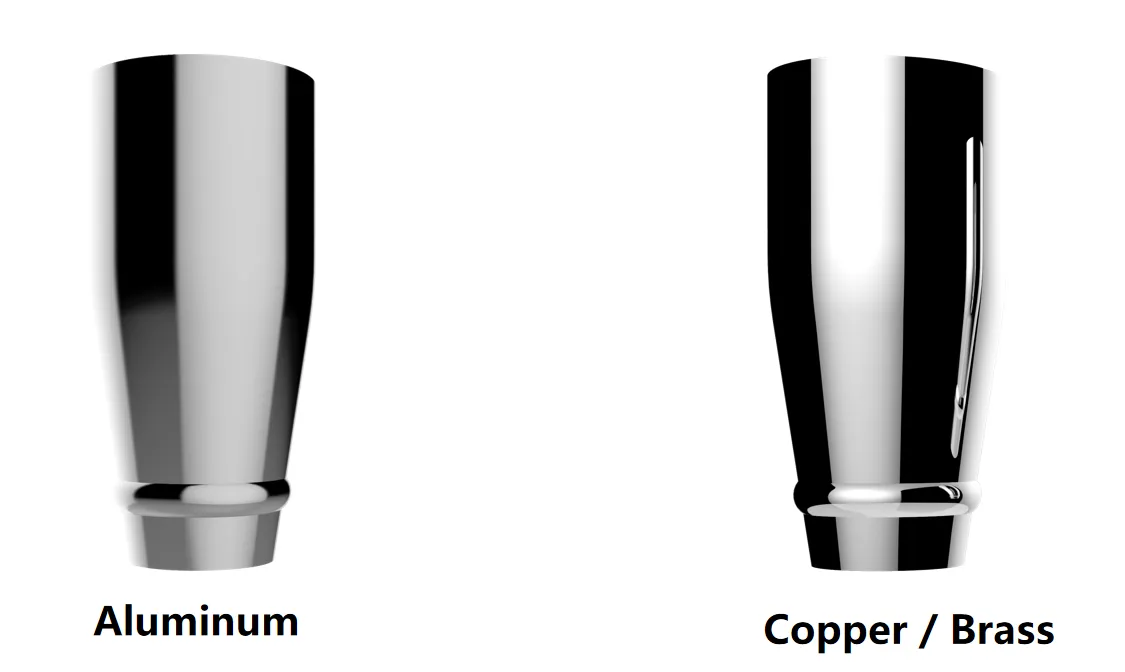
The cause: the ferrule wall is too thin for the longer span; stress concentrates at the handle joint. This is particularly common with aluminium ferrules on wood handles.
The specification: require ferrule wall thickness ≥ 0.40 mm for any single-ferrule double-ended brush, and ≥ 0.50 mm for ferrules exceeding 70 mm in total span. Confirm the crimp style is "double crimp with epoxy" rather than nail glue.
Failure 4: One brush end arrives deformed from packaging
The symptom: consumer opens the retail box and finds one bristle head bent or splayed.
The cause: the packaging insert has the wrong cavity dimensions for the double-ended brush. The brush is too long for the standard slot, so it ships with one end compressed.
The specification: require a tooled insert cavity with 4 mm clearance on length for both ends. Paperboard tray inserts are the easiest to re-tool; moulded-pulp inserts need a new tool. For new programs, budget for a re-tooled insert from day one.
The Double-Ended Brush OEM Specification
A double-ended brush specification is two single-end specifications glued together by a ferrule — and the supplier quotation should reflect that. The standard 12-field spec pack, adapted:
| Specification Item | What You Need to Decide |
|---|---|
| Construction type | Single ferrule two heads / two ferrules one handle / two-sided / modular |
| Bristle: | type, fibre, length, density |
| Ferrule spec: | material, length, wall thickness, crimp style, glue |
| Handle: | material, length, finish |
| Total brush length | Critical for packaging — typical range 160–195 mm |
| QC tests required | 6 tests below |
| Packaging insert cavity dimensions | L × W × H for both ends; 4 mm clearance on length each end |
The 6-Item QC Test List for Double-Ended Brushes
A double-ended brush needs its own QC list. Single-end brush tests are insufficient because they miss end-to-end asymmetry.
| Test | Method | Pass Criterion |
|---|---|---|
| Balance test | Roll on flat surface | Both ends stay raised; centre of gravity within 8 mm of geometric centre |
| Crimp pull strength | Force gauge pull on fibres | ≥ 2.5 kgf retention |
| Glue line visual | Visual + acetone rub | No visible residue; no fibre release |
| Ferrule fit | Visual + torque test | No gap; ferrule flush to handle; no rotation under 0.5 N·m |
| Hand-feel comparison | Side-by-side against reference sample | Both ends pass reference feel; no end feels markedly softer or stiffer |
| Packaging cavity fit | Insert sample into production packaging | Both ends sit in cavity without compression; 4 mm clearance each end |
Where Double-Ended Designs Make Commercial Sense — And Where They Don't
A double-ended brush is not automatically a better SKU. Three cases where it works, three where it does not.
Works well
- Travel kits and TSA-approved sets — the size constraint is the consumer's main buying motivation. A double-ended brush solves it directly.
- Eye sets — a shader and a blender on one handle replaces two brushes in a routine that already moves between them constantly.
- Pro-MUA kits with strict slot counts — kit builders have a hard budget on how many brushes fit in a roll. Dual-purpose brushes reclaim slots.
Works poorly
- Standalone hero SKUs — consumers searching for "the best foundation brush" want one brush that does one thing perfectly. A dual-purpose design dilutes the positioning.
- Premium gift sets — premium positioning is about having the right tool for each step. Asking them to accept a compromise undermines the gift narrative.
- Low-MOQ experimental launches — the cost premium on a 1,000-piece double-ended is hard to justify when you do not yet know whether the consumer prefers the dual-purpose concept.
How We Work With Buyers on Double-Ended Programs
At Fay Brush, we run double-ended brush programs alongside the single-end range, with separate tooling and separate QC stations. Three things we do differently for double-ended programs:
- Dual-spec crimp tool for each ferrule end — never a single tool calibrated once and used for both ends.
- Per-end fibre sourcing — the synthetic fibre lot for end A is not the same lot as for end B. We keep separate reference samples for each.
- Balance-point documentation on every sample — we ship the balance diagram with the pre-production sample so the buyer can sign off on it before tooling is committed.
For brands comparing double-ended against single-end formats, our brush set design guide covers when a dual-purpose design saves money and when it costs you; our ferrule materials guide covers the ferrule specification that applies to both ends; and our quality inspection guide lists the QC tests that should travel with every shipment, including the balance-test from this guide.
Contact us for a double-ended brush spec sheet template, a sample run on your dual-purpose concept, or to discuss whether a same-purpose or dual-purpose design is the right starting point for your program.
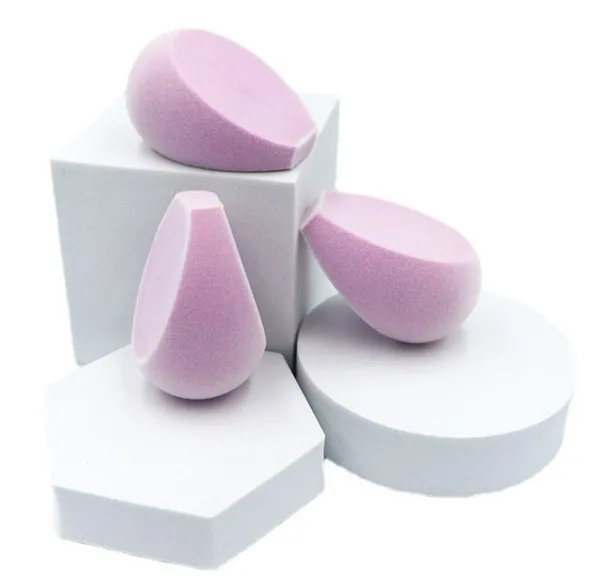
The B2B Sourcing Guide to Makeup Sponges and Powder Puffs
Related Article


CONTACT US

+86 769 81900169

sales@faybrush.com

#172 Huancun Rd, Jinxiaotang Zhutang, Fenggang, Dongguan, 523681 China