
The B2B Sourcing Guide to Makeup Sponges and Powder Puffs
The Companion Category Buyers Under-Specify
Walk into any beauty supply negotiation and you will hear the same conversation about brushes: bristle material, ferrule type, handle finish, unit cost. It is a well-understood, well-documented category. Now change the subject to sponges and puffs and the room goes quiet. Most buyers request "a soft makeup sponge, like the pink one" and leave the rest to the supplier.
That gap has a price. Sponges and puffs are the highest-repeat-purchase items in a beauty tool program — they wear out, they get hygienic complaints, and they are repurchased far more often than brushes. They are also the category where material substitution happens most quietly, because buyers rarely know what to specify. A sponge that should last 60 washes gets sold as a 3-pack replacement filler; a puff that should not shed lint starts leaving fibers across a customer's foundation.
This guide covers the materials, the construction variables, the QC tests, and the compliance notes you need to write a sponge or puff specification that a factory can actually build to.
Sponge and Puff Materials Compared
The "makeup sponge" category contains at least five chemically distinct materials with very different performance profiles. Choosing between them is the first — and most consequential — specification decision.
| Material | Feel | Absorbs Water? | Expands When Wet? | Best For |
|---|---|---|---|---|
| Latex-free PU (hydrophilic) | Very soft, bouncy | Yes | Yes, 1.5–2× | Blending foundation/concealer — the modern standard |
| Latex sponge (natural rubber) | Soft, springy | Yes | Yes, 2×+ | Budget sets, promotional items |
| NBR (nitrile rubber) | Firmer, denser | Low | Mild | Dry powder application, long-life positioning |
| Silicone | Smooth, slick, non-porous | No | No | Cream products, hygiene-forward messaging |
| Microfiber / flocked | Fuzzy, fabric-topped | No (surface) | No | Powder puffs, setting, touch-ups |
Latex-Free PU: The Category Default
Hydrophilic polyurethane is now the baseline material for any sponge positioned as a blending tool. Because it is latex-free, it sidesteps the single biggest marketing liability in the category — latex allergy concerns — and it delivers the soft, bouncy hand feel consumers associate with premium sponges.
The key specification variables inside "PU sponge" are things buyers almost never rank:
- Pore uniformity — determines whether product distributes evenly or sits in patches
- Expansion ratio — how much the sponge grows when saturated; consumers perceive larger expansion as higher quality, but excessive expansion means faster mechanical breakdown
- Density (kg/m³) — the single best predictor of lifespan; low-density sponges feel luxurious initially and collapse quickly
- Resilience — how completely the sponge returns to shape after compression
NBR: The Firm, Long-Life Option
Nitrile rubber sponges are firmer and less absorbent than PU. They are not the right tool for blending liquid foundation, but they hold up far longer and are the correct choice for dry powder application, or for brands positioning on longevity rather than softness. Specify NBR when your market values durability and washability over a plush hand feel.
Silicone: Hygiene Positioning
Silicone applicators don't absorb product at all — which is exactly their selling point. Nothing penetrates the surface, so there is no product waste and no internal bacterial harbor. The trade-off is technique: silicone requires smooth, sweeping motions and does not offer the natural bounce most users expect from a sponge. It works best as an add-on item rather than a set centerpiece.
Latex Sponge: Still Valid, Needs Disclosure
Natural rubber latex sponges remain common in budget and promotional assortments because the material cost is low and the hand feel is genuinely good. The constraint is labeling: latex allergy risk means most major retailers require explicit latex/non-latex declaration on-pack and in product data. For markets with strong allergen-labeling expectations, the price advantage of latex rarely survives the compliance and returns cost.
Powder Puffs: A Different Specification Problem
Puffs are not sponges, and specifying them as if they were is a common error. A puff's job is to pick up powder and transfer it evenly — which means the critical variable is surface texture, not internal absorption.
| Puff Type | Construction | Effect |
|---|---|---|
| Velvet / plush puff | Short-pile fabric over foam core | Soft, diffuse powder deposit |
| Cotton puff | Woven cotton, sometimes flocked | Traditional, dense deposit |
| Flocked puff | Foam core with flocked fiber surface | Even, medium pickup |
| Silicone puff | Solid silicone, non-porous | Zero product absorption |
The specifications that matter most for puffs:
- Pile height and pile density — determines how much powder the makeup puff holds and how softly it deposits
- Lint shedding — the number-one quality complaint on low-cost puffs; test with an abrasion rub against dark fabric
- Strap configuration — single-strap, double-strap or finger-slot; affects usability more than buyers expect
- Edge finishing — sealed versus cut edges; unfinished edges fray and shed
Construction Variables That Separate Tiers
Beyond material, three production decisions determine whether a sponge or puff performs at the tier you are paying for.
Expansion Ratio Control
Test expansion by measuring the sponge dry and fully saturated. A controlled 1.5–2× expansion reads as premium; inconsistent expansion within a single production lot is a quality failure regardless of the average. Require lot-level records, not a one-time sample claim.
Edge Sealing and Angle Cutting
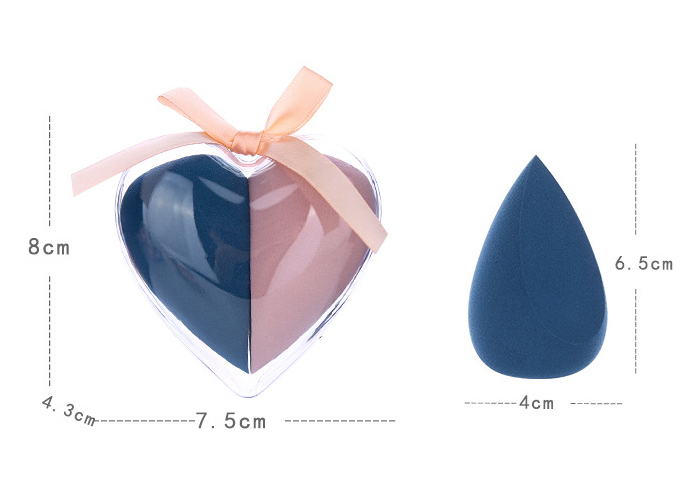
Angled cuts (flat, rounded, pointed) define the sponge's use cases — a flat side for blending large areas, a pointed tip for the nose and under-eye. Specify which faces are cut, because factories default to the cheapest geometry otherwise.
Color and Pigment Fastness
Colored blender sponges must be tested for color migration when wet. A sponge that bleeds pigment onto a customer's foundation — or stains a light-colored makeup bag — generates returns. Request colorfastness test data for any non-white sponge.
Quality Control: The Tests to Require
Add these to your order specification. Each one maps to a real consumer complaint.
| Test | Method | Acceptance Criteria |
|---|---|---|
| Expansion ratio | Measure dry vs. saturated dimensions | Within specified range, consistent across lot |
| Resilience / compression set | Compress 50% for 22h, measure recovery | ≥90% recovery |
| Absorption rate | Water uptake by weight | Within spec window |
| Odor | Panel assessment after saturation | No off-odor when wet |
| Color migration | Saturated sponge on white fabric, 24h | No visible transfer |
| Lint shedding (puffs) | Abrasion rub on dark fabric | Below defined fiber count |
| Residue / extractables | Solvent extraction screening | Within limits |
| Dimensional tolerance | Caliper measurement, sampled | ±0.5 mm typical |
Two notes on how to use this table well. First, request lot-level data, not a single-sample test report — the failure mode in this category is inconsistency between batches, not a bad first sample. Second, define a wash-cycle endurance test with your own parameters (temperature, cleanser type, mechanical action) and make it part of the approved-sample record. That single document becomes your defense in any quality dispute.
Specify the Whole Tool Kit, Not Just the Brush
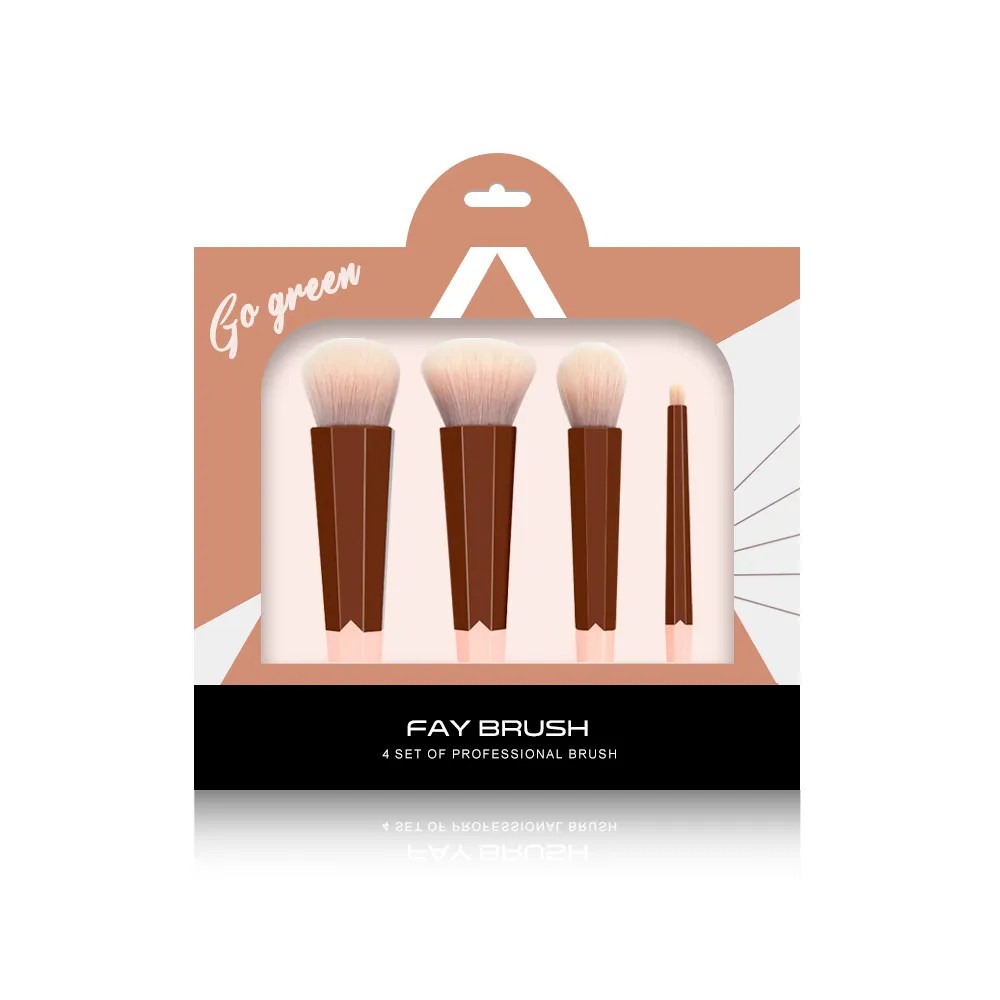
Brushes and applicators are bought by the same buyer, used in the same routine, and repurchased on different cycles — which makes them a natural single order. Building both into one supplier relationship reduces freight, documentation and vendor overhead, and it gives your retail accounts a complete tool offering from one invoice. Our brushes and tools program and the companion applicator range are built to be ordered together for exactly this reason.
Contact our team to request sponge and puff samples with material specifications, or to build a combined brush-and-applicator quotation for your market.
Frequently Asked Questions
Q1: What is the difference between a latex and a latex-free makeup sponge? Latex sponges use natural rubber, which delivers a springy feel at low cost but carries allergy risk and requires explicit allergen labeling. Latex-free sponges use hydrophilic polyurethane (PU), which is softer, generally more durable, and avoids the labeling constraint — which is why latex-free PU is now the default for any sponge positioned as a premium blending tool.
Q2: How do I tell a good sponge from a cheap one before ordering? Three quick checks: (1) saturate it and measure expansion — consistent 1.5–2× signals controlled production; (2) squeeze and release — it should return to shape almost completely, which indicates adequate density and resilience; (3) saturate a colored sponge and press it on white fabric — any pigment transfer is a defect risk. Then confirm the same performance on a production lot sample, not just the approved first sample.
Q3: Why do my powder puffs shed fibers onto the face? Lint shedding comes from short or loose surface fibers and unfinished edges. Specify pile height and density, require sealed edges rather than cut edges, and add an abrasion test against dark fabric to your QC list. Shedding is nearly always a specification gap, not a random manufacturing defect.
The Makeup Brush Ferrule Guide and Why This Part Decides Brush Life
Related Article


CONTACT US

+86 769 81900169

sales@faybrush.com

#172 Huancun Rd, Jinxiaotang Zhutang, Fenggang, Dongguan, 523681 China