Private Label Makeup Brush Trends 2026
Private Label Makeup Brush Trends 2026: Branding, Packaging & Differentiation
More brands are launching their own brush lines without owning a single piece of manufacturing equipment, and the OEM makeup brush partners who serve them are evolving from anonymous factories into full-service product development studios.
If you're a beauty brand founder, product developer, or procurement manager evaluating OEM partners in 2026, the landscape looks fundamentally different from even two years ago. Customization options have exploded, packaging has become a primary differentiator.
This guide breaks down the five private label and branding trends reshaping the makeup brush industry — and what each one means for your next sourcing decision.
Why Private Label Is Booming in 2026
The global makeup brush market is projected to grow at a CAGR of 7–11.8% between 2026 and 2033, with private label manufacturing capturing an outsized share of that growth. The reasons are straightforward:
- Lower barriers to entry. A beauty startup can launch a full brush line with as few as 500–1,000 units per SKU, compared to the 10,000+ minimums that dominated the industry a decade ago.
- Faster time-to-market. Experienced OEM partners now offer end-to-end services — from fiber selection to packaging design — compressing the concept-to-shelf timeline from 6–9 months to 8–12 weeks.
- Consumer demand for brand identity. Today's consumers don't just buy brushes; they buy into a brand's aesthetic, values, and story. Private label allows brands to control every touchpoint — handle color, ferrule finish, packaging, even the unboxing experience.
Trend #1: Customization Goes Beyond Logo Printing
Five years ago, "custom" in the makeup brush world meant slapping a logo on a stock brush. In 2026, it means full product specification control:
| Customization Layer | What Brands Now Expect |
|---|---|
| Handle color | Pantone-matched colors, matte/gloss finishes, metallic plating |
| Ferrule finish | Brushed aluminum, rose gold, gunmetal, anodized colors |
| Bristle type | Specific fiber blends, taper patterns, density grades |
| Handle shape | Ergonomic grips, angled handles, custom lengths |
| Engraving | Laser-etched logos, debossed patterns, serial numbers |
| Set curation | Brand-defined brush combinations, not factory stock sets |
Trend #2: Packaging Is No Longer an Afterthought — It's the Product
Several breakthroughs are now filtering into makeup brush production:
New Materials Hitting the Market
-
Hazelnut shell composite: A polypropylene base blended with 10% upcycled hazelnut shells from confectionery waste. Each piece has visible organic particles, creating a unique aesthetic while remaining recyclable. Relevance for brush packaging: brands seeking a natural, tactile unboxing experience can now use food-waste-derived materials for brush cases and trays.
-
100% Post-Consumer Recycled (PCR) plastic: Packaging made entirely from PCR plastic, with Shadow Printing technology that enables 360° decoration without additional ink or foil — reducing CO₂ emissions by up to 26%. Relevance: brush sets packaged in PCR plastic cases now have a credible sustainability story without sacrificing visual quality.
-
Regenerated cellulose fiber: Made from FSC-certified Swedish pine and spruce, this fiber offers a renewable alternative to synthetic applicator materials, with a micro-porous structure that captures more formula per dip. Relevance: while primarily a mascara/brow innovation, the fiber technology is expanding into precision brush applications.
Trend #3: Minimalist Design Becomes the Default Premium Aesthetic
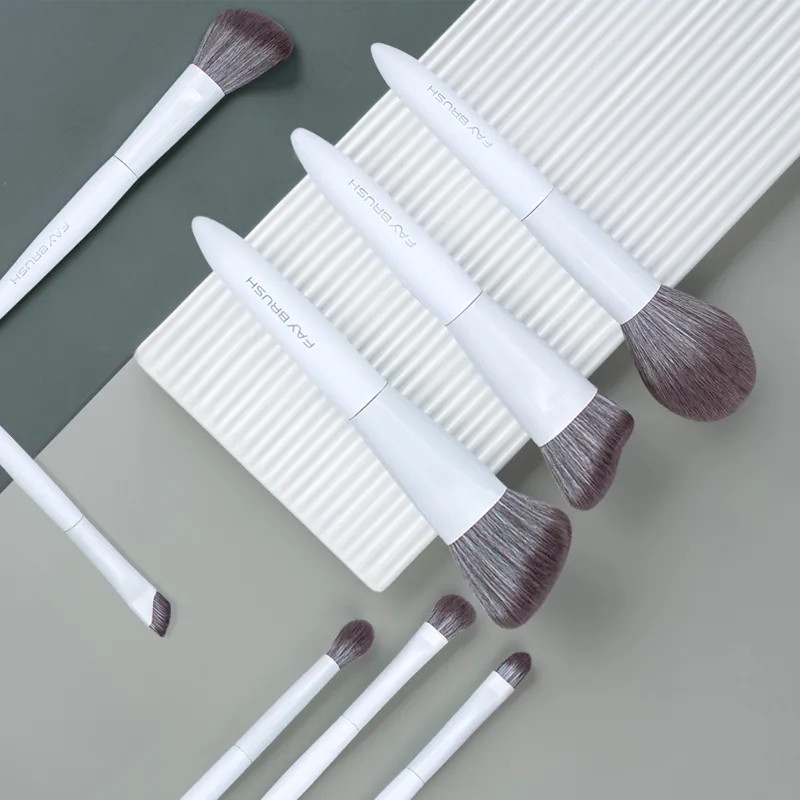
The era of ornate, embellished brush handles is fading. In 2026, minimalist design signals premium positioning — clean lines, matte finishes, and restrained color palettes. The trending handle colors read like a interior design mood board:
- Beige and cream — warmth without flashiness
- Dusty pink and sage green — gender-neutral, "clean beauty" adjacent
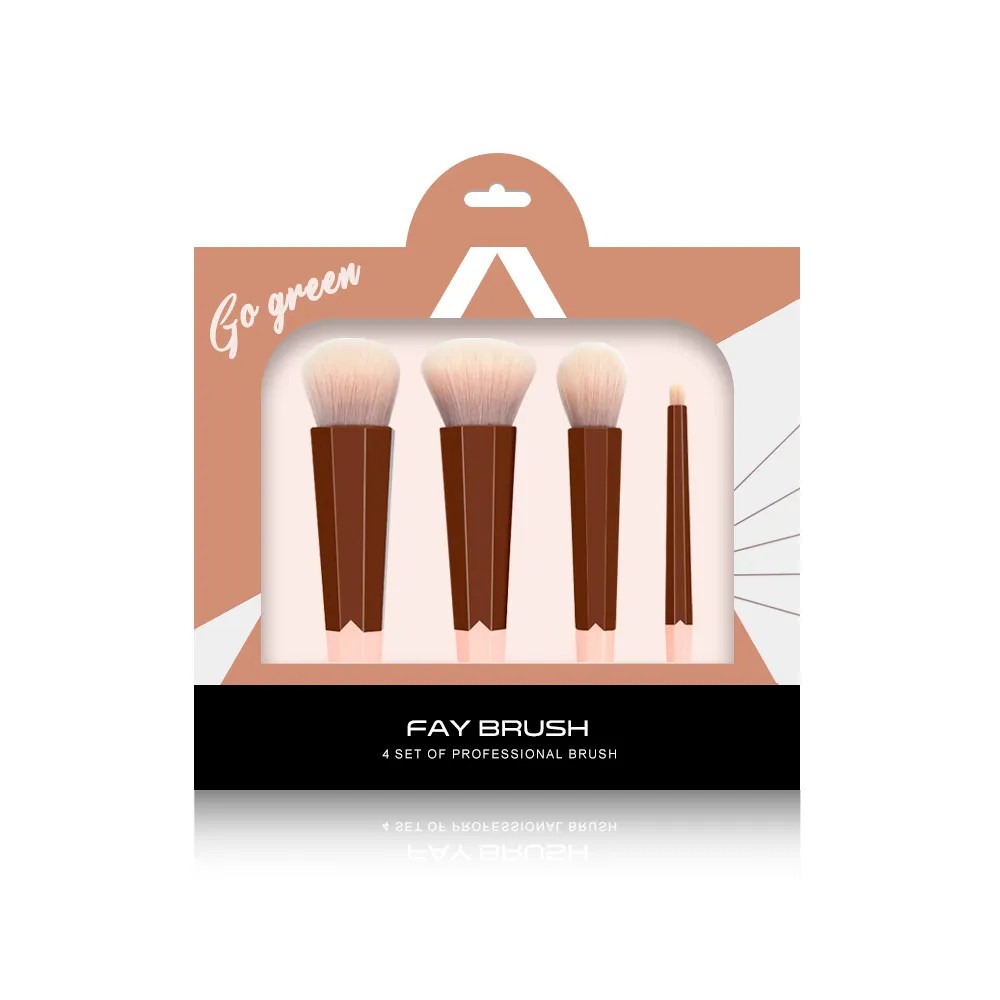
- Chocolate brown and matte black — timeless, versatile across brand identities
- Soft-touch coatings — a velvety tactile finish that instantly elevates perceived quality
This trend matters for OEM sourcing because it changes the specification conversation. Instead of complex mold designs and multi-color printing, brands are requesting simpler shapes with superior surface finishes — which is actually easier and faster to produce, but requires higher quality control standards on surface defects.
Trend #4: Multi-Functional Brushes Reduce SKU Complexity
Brands are increasingly requesting brushes that serve double duty — not to cut costs, but to simplify their product lines and appeal to minimalist consumers. Common multi-functional combinations being developed in 2026:
| Multi-Functional Brush | Combined Functions |
|---|---|
| Foundation + Contour | Liquid/cream application + sculpting in one tool |
| Blush + Highlighter | Color application + luminous finish |
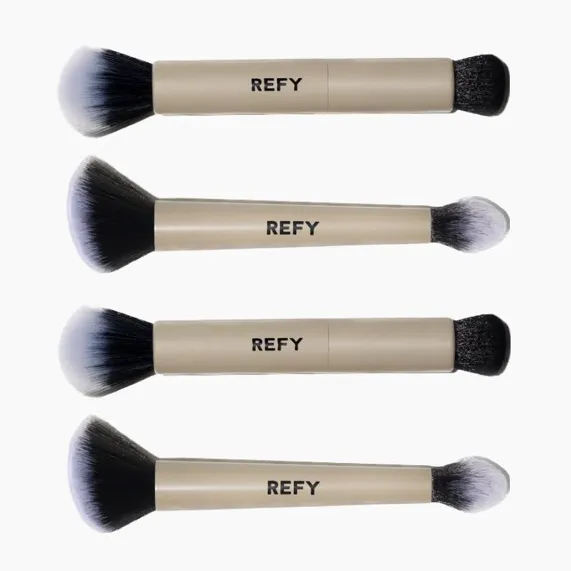
| Dual-ended eye brush | Shader on one end, blender on the other |
| Powder + Bronzer | Loose powder + warm contour |
Why this matters for B2B sourcing: Multi-functional brushes allow brands to offer a "complete routine" with fewer SKUs — a 5-brush set that covers 8 functions, for example. This reduces tooling costs (fewer unique brush molds), simplifies packaging design, and creates a stronger value proposition for the consumer.
Trend #5: Smart Packaging and Digital Integration
QR codes, NFC tags, and scan-able labels are moving from novelty to standard inclusion in premium brush sets. Smart packaging serves multiple purposes:
- Tutorials and usage guides: A QR code on the packaging links to video tutorials showing how to use each brush in the set — particularly valuable for multi-brush kits targeting beginners.
- Authentication and anti-counterfeiting: NFC-enabled packaging allows brands to verify product authenticity, which is increasingly important as private label brush quality improves and counterfeiting becomes more sophisticated.
- Loyalty and re-engagement: Scanning the code can trigger a re-order flow, a brush cleaning guide, or a loyalty program signup.
What This Means for Your 2026 Sourcing Strategy
If you're planning to launch or expand a makeup brush line this year, here's how to adapt:
-
Lead with design, not catalog. Don't start by browsing a factory's product line — start with your brand's design language (colors, finishes, shapes) and find a partner who can execute it. A good OEM partner should ask about your brand identity, not just your order quantity.
-
Budget for packaging early. Packaging can make or break the perceived value of a brush set. Allocate 15–25% of your per-unit budget to packaging from the start, not as an afterthought.
-
Test multi-functional designs. If you're launching a new line, consider including 1–2 multi-functional brushes in your set. It reduces SKU count while increasing the perceived value proposition — a win for both production efficiency and consumer marketing.
-
Integrate digital touchpoints. A QR code on your brush set packaging is one of the highest-ROI investments available — it transforms a static product into an interactive brand experience for pennies per unit.
-
Evaluate partners on sample development. Before placing a production order, request a full custom sample (not a catalog sample). The speed, quality, and communication during the sample phase tells you everything you need to know about the production phase.
How Fay Brush Supports Private Label Brands
At Fay Brush, we've spent 16+ years evolving from a standard OEM manufacturer into a full-service private label and ODM partner. Here's how we align with the 2026 trends:
- Full customization: Pantone-matched handle colors, ferrule finishes, custom handle shapes, laser engraving, and brand-specific bristle configurations.
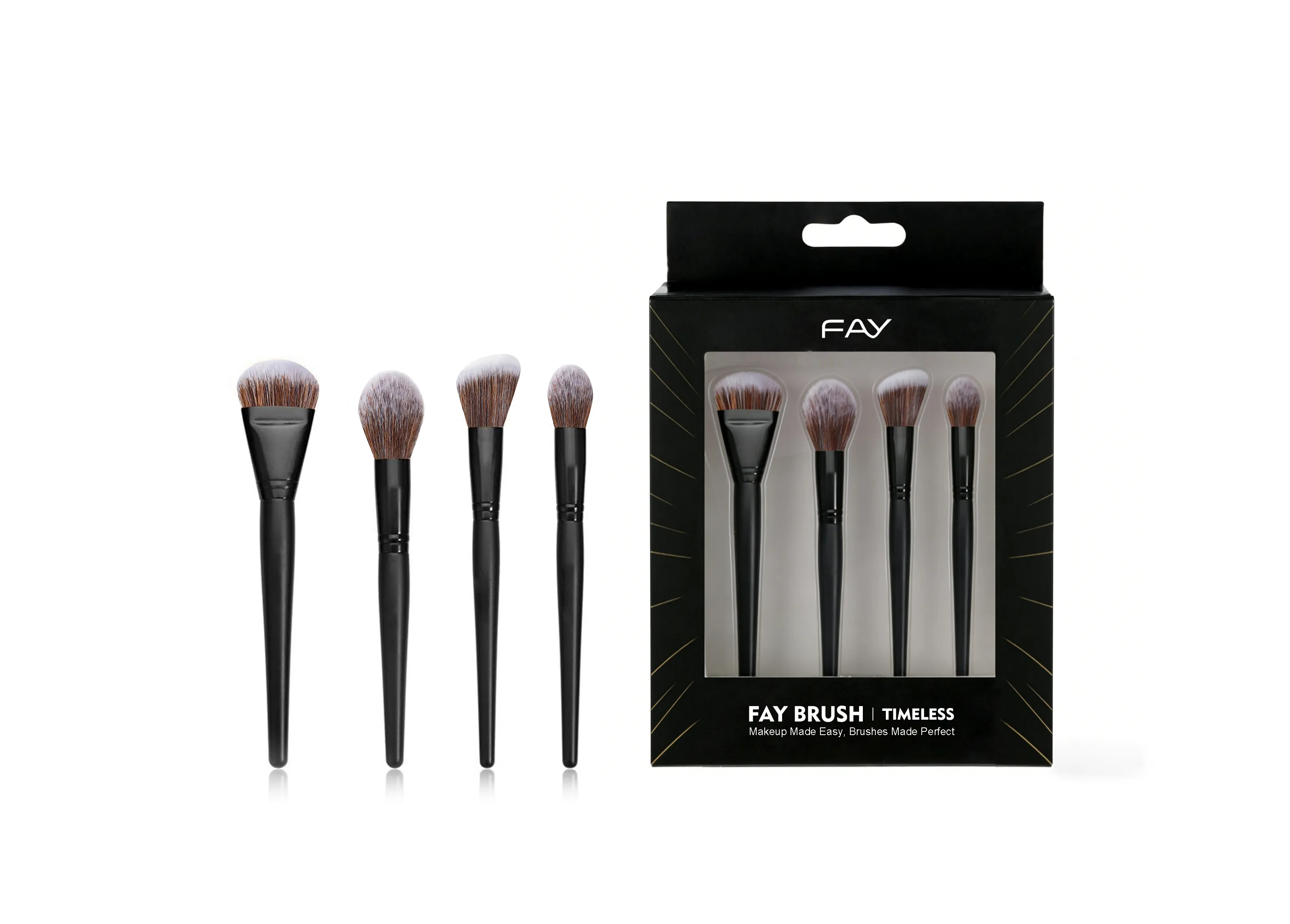
- Packaging solutions: Magnetic gift boxes, PU leather cases, FSC-certified paper sleeves, and window-cut kraft boxes — sourced and assembled in-house.
- Multi-functional brush engineering: Dual-density bristle designs tested for genuine dual-purpose performance, not just marketing claims.
- Sustainable material options: FSC-certified bamboo and wooden handles, vegan synthetic fibers, recyclable aluminum ferrules, and PCR packaging materials.
- Certifications: ISO 9001, BSCI, SMETA, and FSC — with audit reports available upon request.
- Sample development: Custom physical samples in 5–7 days, with a detailed spec sheet.
Ready to develop your custom brush line? Request a free sample or explore our product capabilities — we'll help you translate your brand identity into a brush collection that stands out.
FAQ: Private Label Makeup Brush Sourcing
1. What is the minimum order quantity (MOQ) for private label makeup brushes?
MOQ varies by customization level. For logo printing on stock brushes, expect 500–1,000 units per SKU. For fully custom designs (handle shape, color, ferrule finish, packaging), MOQ typically starts at 1,000–3,000 units per SKU. Some OEM partners offer lower MOQs for first-time orders to build the relationship — always ask.
2. How long does it take to launch a private label brush line?
With an experienced OEM partner: 8–12 weeks from design approval to delivery for a custom set. The timeline breaks down roughly as: sample development (1–2 weeks), sample approval and revisions (1–2 weeks), production (4–6 weeks), and shipping (1–2 weeks). Fully bespoke ODM projects with custom molds may take 12–16 weeks.
3. Can I get sustainable packaging for my private label brush sets?
Yes. Most established OEM partners now offer FSC-certified paperboard, PCR plastic, biodegradable coatings, and soy-based inks. The cost premium for sustainable packaging is typically 10–20% over conventional options, but it strengthens your brand's sustainability positioning and may qualify for retail shelf placement in eco-conscious markets.
Makeup Brush Market by Region 2026: Localization Guide for Brands
2026 Makeup Brush Manufacturing OEM Guides
Related Article


CONTACT US

+86 769 81900169

sales@faybrush.com

#172 Huancun Rd, Jinxiaotang Zhutang, Fenggang, Dongguan, 523681 China