Beauty Device Brush Head OEM
Beauty Device Brush Head OEM: Complete Sourcing Guide For Beauty Device & Skincare Brands
Introduction Beauty device replacement brush heads have become high‑margin essential accessories for electric facial cleansers, at‑home skincare gadgets and scalp massage devices worldwide. Unlike ordinary cosmetic makeup brushes, device‑mounted brush heads demand precise structural matching, water‑resistant performance, skin‑safe raw materials and strict durability testing. Choosing the right OEM manufacturer directly impacts product return rates, consumer reviews and brand reputation.
At Faybrush, we provide OEM & ODM solutions for both standard makeup brushes and custom beauty‑device brush‑head accessories for global beauty and hardware brands. You may also explore extended beauty accessory resources at our partner site Faymakeup.
Understand Special Requirements For Beauty Device Brush‑Head OEM
Difference Between Device Brush Heads And Regular Makeup Brushes
Standard makeup brushes focus on powder pickup and cosmetic blending. Beauty‑device brush heads work under vibration or rotation, enduring frequent water exposure, skincare cleanser and active‑formula contact. They must resist pulling force, chemical corrosion and mold growth after repeated washing. Key technical challenges include connector dimensional tolerance, anti‑fall‑off performance and skin‑friendly bristle hardness. For general cosmetic brush manufacturing knowledge, read our related article: How to Choose a Makeup Brush Manufacturer.
Main Product Categories For Beauty Device Brush‑Head OEM
- Silicone cleansing brush heads: soft silicone pins for sensitive‑skin deep cleansing, anti‑mold and easy‑to‑clean
- Synthetic fiber replacement brush heads: PBT / Taklon fiber for gentle exfoliation; need strict pull‑off and water‑resistant glue testing
- Dual‑function composite heads: combination of silicone and fiber for multi‑mode skincare devices
- Scalp massage brush heads: customized bristle hardness for hair‑washing electric devices
Common Customer Pain Points In OEM Projects
Many brands encounter typical production risks: bristle shedding during high‑speed rotation, loose connector snap‑fit, silicone odor, mold growth after washing, dimensional mismatch causing assembly failure, and missing compliance documents for EU / US market access.
Core Factors For Material Selection
Silicone Material Requirements
Silicone brush heads are widely used for cleansing devices. Prioritize food‑grade / skin‑safe BPA‑free silicone. Confirm Shore‑A hardness matching target skin groups: softer hardness for sensitive‑skin users, medium hardness for normal‑skin deep exfoliation. Low‑quality recycled silicone may produce strange odor and cause skin irritation.
Synthetic Fiber & Adhesive Standards
Connector & Structural Material
The plastic or plastic‑metal connector determines assembly compatibility with your main beauty device. Strict dimensional tolerance control is critical; small deviations will lead to loose fitting or inability to lock onto the host device.
OEM & ODM Customization Scope For Beauty Device Brush Heads
ODM: Modify Existing Mature Brush‑Head Solutions
If you do not want high mold investment, select existing base structures for modification: adjust bristle hardness, change Pantone colors, print brand logo, customize packaging. This path features lower MOQ, shorter sample lead‑time and lower tooling cost.
OEM: Fully‑Custom New‑Mold Development
When you need exclusive shapes, unique connector structures or special bristle layouts, OEM new‑mold development is required. You need to provide complete tech‑pack drawings with dimension specifications, skin‑performance requirements and assembly parameters. Tooling cost and MOQ will be higher than ODM projectsAlibaba Se....
Customizable Items Checklist
- Brush‑head outline shape and bristle arrangement pattern
- Silicone / fiber material and hardness grade
- Connector snap‑fit size matching your beauty‑device host
- Pantone color matching, laser engraving / pad‑print logo
- Individual retail packaging, neutral bulk‑pack for device bundle sales
Quality Control & Essential Testing Standards
Mandatory Performance Testing Items
- Bristle pull‑off test (dry & wet condition, simulating rotating vibration work status)
- Water‑resistant & aging test: repeated washing cycle test to evaluate anti‑mold and anti‑deformation performance
- Skin‑safety material test: heavy‑metal, skin‑irritation test reports
- Assembly matching test: 100‑times repeated plug‑in test for connector snap‑fit structure
Whole‑Process QC From Raw Material To Shipment
Reliable manufacturers implement IQC raw‑material inspection, IPQC in‑process inspection and finished‑goods AQL sampling inspection. Avoid suppliers who only carry out final inspection; hidden structural defects can only be caught during production processing.
Golden‑Sample Confirmation Rule
Always sign off on pre‑production golden samples. All mass‑production batches must be compared against the approved golden sample for dimension, appearance and performance before shipment.
MOQ, Sample Lead‑Time And Commercial Terms
MOQ Difference Between ODM And OEM New‑Mold
- ODM (modify existing molds): MOQ usually starts from 500‑1000 pcs per style
- OEM fully‑custom new mold: MOQ normally ranges from 2000‑5000 pcs, plus one‑time mold‑development cost
Typical Project Timeline
- ODM sample making: 7‑12 working days
- OEM new‑mold T1 sample: 20‑35 working days
- Mass‑production lead‑time after sample confirmation: 25‑40 working days, subject to order quantity
Cost Breakdown Reminder
Do not only compare unit price. Clarify sample fees, mold‑development charge, logo printing surcharge, packaging cost and shipping expense in early‑stage communication.
Global Compliance & Certification Requirements
Essential Certificates For North American & EU Markets
ISO9001 quality‑management certificate, SGS raw‑material safety report, RoHS, REACH compliance documents. Silicone‑type brush heads for skin contact need food‑grade test reports. Amazon and offline retail channels will request these files for audit.
Avoid Compliance Risks
Confirm your supplier can provide batch‑corresponding test reports, not only old certificate pictures. Non‑compliant accessories may result in customs detention, platform product removal and brand‑claim risksEARTS. Faybrush holds ISO9001, BSCI, SMETA and FSC certificates for global market supply.
How To Select A Qualified Beauty‑Device Brush‑Head OEM Supplier
Verify Real Manufacturing Capacity
Confirm whether the factory owns bristle tufting / silicone‑injection workshops, or purely outsources all production. Request workshop photos, production‑process videos and audit records. A trading company without in‑house capacity struggles to control dimensional precision and defect rates for device‑matching accessories.
Check Relevant Project Experience
Ask for past cases of beauty‑device supporting brush‑head cooperation. Factories experienced in device accessories understand connector‑matching risks, unlike factories that only produce ordinary cosmetic makeup brushes.
Evaluate Technical Support & After‑sales Mechanism
A qualified OEM partner can give professional suggestions for material selection, structural feasibility and testing items according to your device parameters. Clarify defect‑handling policies for mass‑production non‑conformity before placing orders.
Final Checklist For Your Beauty‑Device Brush‑Head OEM Project
✅ Clarify whether to adopt ODM modification or OEM new‑mold development
✅ Confirm connector dimension drawing and assembly tolerance requirements
✅ Lock down raw‑material grade, hardness and mandatory testing items
✅ Confirm MOQ, sample lead‑time, mold‑cost and full‑project cost breakdown
✅ Confirm target‑market compliance certificates and test‑report deliverables
✅ Complete golden‑sample signing‑off before mass‑production launch
Conclusion
Beauty‑device brush‑head OEM is far more complex than ordinary cosmetic‑tool sourcing. Structural matching, material safety, rotating‑work durability and regulatory compliance determine market performance of your accessory products.
If you are seeking a reliable partner for custom beauty‑device brush‑head or cosmetic‑tool OEM projects, please visit www.faybrush.com for sample consultation and quotation. Discover further beauty‑accessory product ranges at our partner portal: www.faymakeup.com.
FAQ
Q: Can we make small‑batch trial orders for beauty‑device replacement brush heads?
A: For ODM modified existing‑tooling items, small trial orders starting at 500 units are available. Brand‑new custom molds require higher MOQ to cover mold‑amortization costs.
Q: Why do fiber‑type device brush heads still shed even using the same bristles as makeup brushes?
A: Device brush heads keep vibrating or rotating during operation under wet conditions. Ordinary makeup‑brush glue cannot resist long‑term hydrolysis and mechanical impact. Special water‑resistant adhesive plus wet‑state pull‑force testing are required.
Q: What documents do I need for selling brush‑head accessories on Amazon EU?
A: You need REACH material‑safety reports, RoHS documents and ISO‑related factory audit certificates. Specific requirements vary by product category.
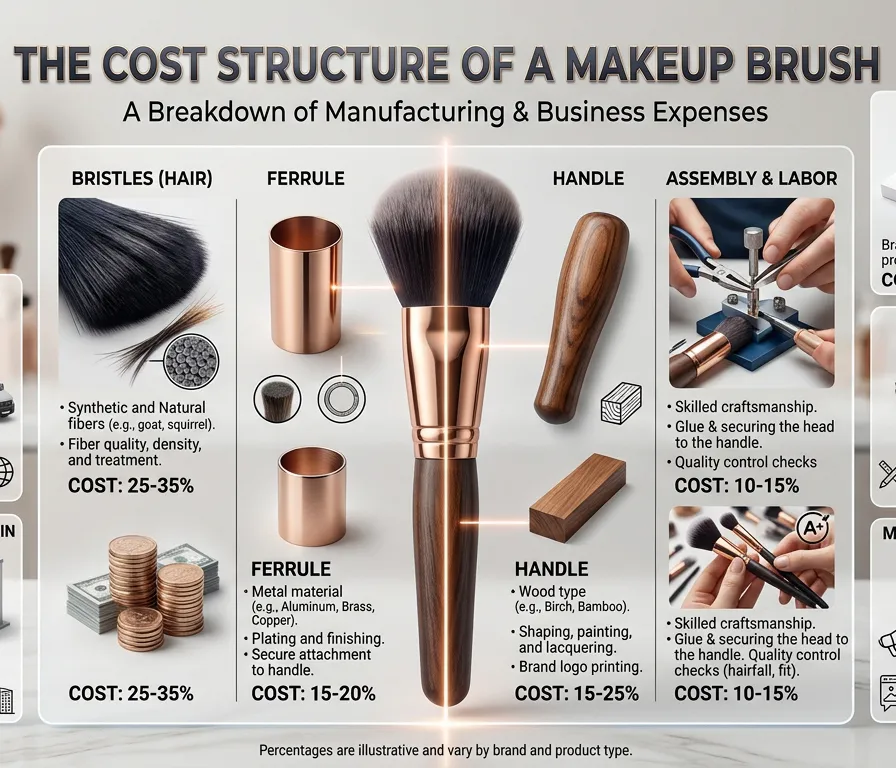
The Cost Structure of a Makeup Brush
Related Article


CONTACT US

+86 769 81900169

sales@faybrush.com

#172 Huancun Rd, Jinxiaotang Zhutang, Fenggang, Dongguan, 523681 China