
2026 Makeup Brush Manufacturing OEM Guides
Most "industry trends" articles talk about what consumers are buying. This one is different: it is about what is happening inside the factory — because in 2026, the way makeup brushes are made is changing faster than the brushes themselves, and those changes directly affect your lead times, your unit costs, your defect rates, and whether your next launch ships on time.
If you are a brand owner, private-label buyer, or product developer sourcing from an OEM/ODM partner, the manufacturing-side trends below are the ones that show up in your purchase orders — not in a mood board.
1. The Industry Is Consolidating — and Most Factories Still Can't Do It All
The first thing to understand about the supply side is its structure. China's domestic makeup brush OEM capacity already exceeds 12 billion units per year (2025 industry data), but the share of factories with genuinely integrated, end-to-end capability — producing bristles, ferrules, and handles in-house — is under 8%.
What does that mean for you? Most "manufacturers" are really assemblers. They buy filaments from one supplier, aluminum ferrules from a metal shop, wooden or plastic handles from another, and put them together. Every extra handoff is a place where lead times stretch, costs mark up, and quality variance creeps in.
A factory with true vertical integration — filament drawing, ferrule stamping, handle machining, assembly, and packaging under one roof — typically achieves:
- 15–20% lower ex-works pricing versus multi-sourced assembly (industry analyses, 2026)
- Compressed customization lead times of 30–45 days, with rush orders in 20–25 days
- Tighter color and density consistency, because there is no supplier boundary to blame
2. Automation Is Replacing the Aging Artisan — Quietly but Decisively
Hand-tied brush construction is a dying craft. The expertise concentrates among aging craftspeople in places like Kumano, Japan, with a thin apprenticeship pipeline. Chinese factories are solving the same labor gap differently: with semi-automated tufting equipment that now matches hand work on density and bristle-retention strength, and CNC precision tip-grinding that improves bristle-edge arc accuracy by roughly 32% over manual grinding (industry survey, 2026).
The practical win for buyers: consistency. A hand-tied line produces beautiful beauty tools but with measurable variation unit-to-unit. An automated line produces brushes that are indistinguishable from each other — which is exactly what a brand needs when a customer orders a replacement six months later and expects the same feel.
This is also why defect rates are dropping. Factories that completed digital upgrades report:
- Defect rates down an average of 62%
- Delivery lead times shortened by ~35%
- AI-powered optical inspection now scans each brush for bristle density, length uniformity, and handle adhesion at roughly 3× the speed of manual checks, holding pass rates around 99.8% versus ~95% by eye
3. Quality Control Goes Digital — and the Numbers Are Not Subtle
Quality control is where the gap between a serious factory and a commodity assembler becomes visible in your returns rate. The current best-practice standard in 2026 is a three-tier QC system:
| QC stage | What it checks | How it is done |
|---|---|---|
| IQC (incoming) | Raw filament tensile strength, ferrule dimensions, handle moisture content, color ΔE | Sample-tested on arrival; rejected lots returned to supplier |
| IPQC (in-process) | Tuft density, bristle retention, ferrule-handle adhesion, alignment | Automated optical inspection at ~3 scans/sec, ~10,000 units/hour |
| QA (finished) | Final appearance, color match (ΔE ≤ 2), bristle fall-out, packaging integrity | 100% inspection on premium lines; statistical sampling on volume lines |
The payoff is measurable. Factories running this system hold defect rates at or below 0.1%, against an industry average closer to 1% (industry analyses, 2026). For a brand shipping 100,000 units, that is the difference between 100 defective units and 1,000 — and between a clean retail listing and a wave of one-star reviews.
Color consistency deserves a specific mention. The best factories now control color difference to ΔE ≤ 2 — a threshold invisible to most consumers — using spectrophotometers at incoming and finished-goods stages. If your brand runs a signature ferrule finish (gunmetal, champagne gold), this is the metric that determines whether your Q1 and Q3 reorders look like the same product.
4. Small-Batch Flexibility Is the New Normal — and It Changes How You Launch
A persistent pain point for emerging brands has been MOQ. Historically, custom brushes meant 5,000–10,000 unit minimums and 15+ day sampling cycles. In 2026, that wall is coming down.
- Small-batch custom orders grew ~94% year-over-year in 2025–2026 (industry survey, 2026)
- Some factories now offer 100-unit minimums for custom designs — material, handle color, and packaging all specifiable
- Sampling cycles have compressed from 15+ days to ~7 days, thanks to automated production lines that no longer require full-line changeover for small runs
For a brand, this unlocks a fundamentally different go-to-market model: test a 500-unit run on TikTok Shop, read the sell-through in two weeks, and reorder against real demand rather than a forecast. It is the manufacturing-side mirror of the live-commerce trend we covered in our 2026 industry trends overview — fast channels demand fast factories.
5. Peak-Season Resilience: Who Ships and Who Stalls
The fourth quarter is where supply chains win or lose. Industry reports indicate Q4 order volumes for brushes and filaments traditionally surge 40–60% driven by holiday, Black Friday, and Singles' Day demand. How a factory handles that surge is a leading indicator of whether your order arrives before the selling window closes.
The factories that ship on time in Q4 share a few behaviors:
- Raw-material stockpiling 3–4 months ahead — nylon 6/6 filament, wooden handles, aluminum ferrules — to insulate against spot shortages
- Production-line expansion of 3–5 assembly lines, increasing floor space 20–30%, with seasonal labor
- Automation investment that cuts per-unit production time ~25% and labor cost ~18%, compressing peak lead times from ~45 days to ~30 days
- Logistics pre-positioning — leasing warehouse space near ports and negotiating priority shipping slots
Why Brands Work with Fay Brush
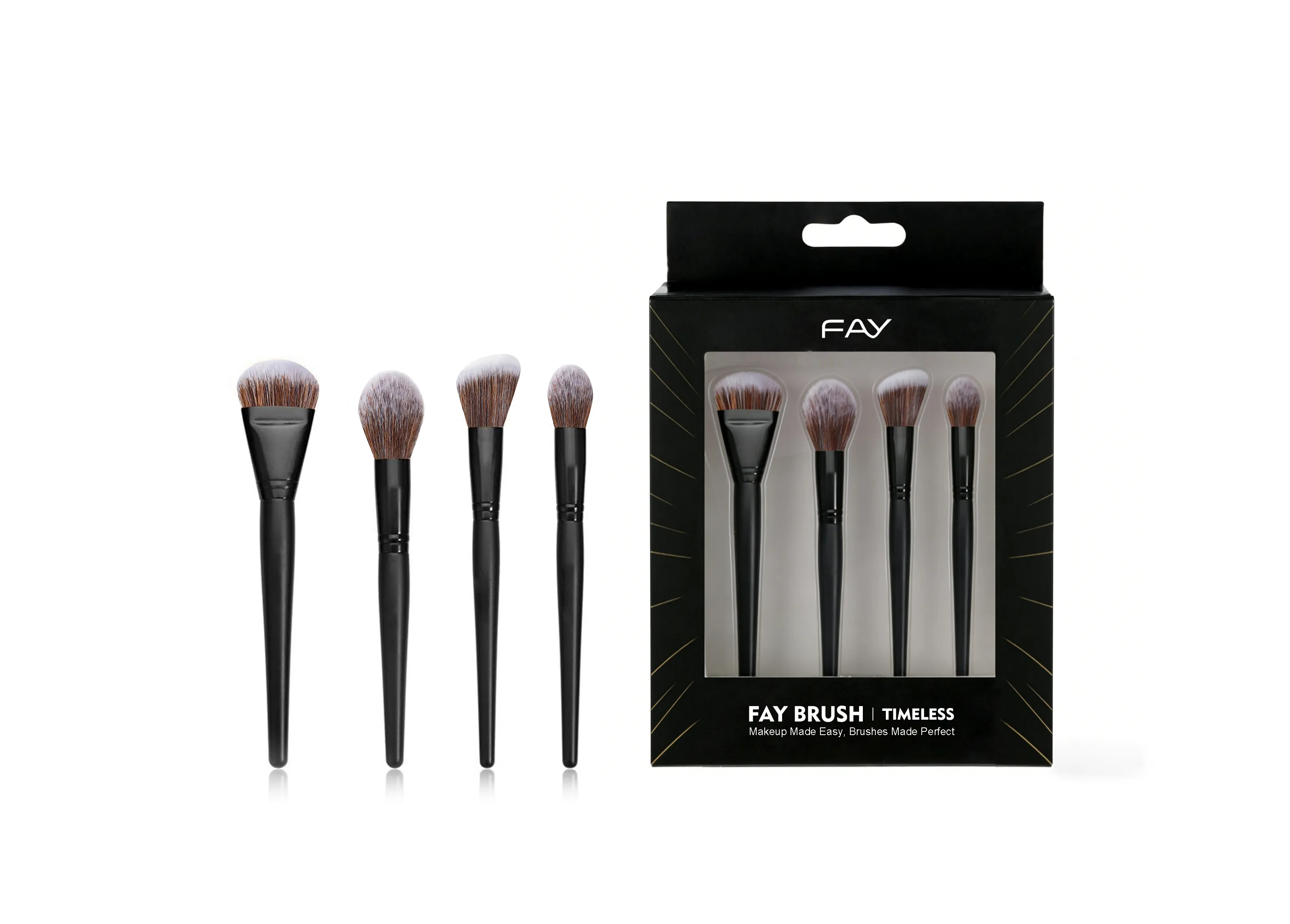
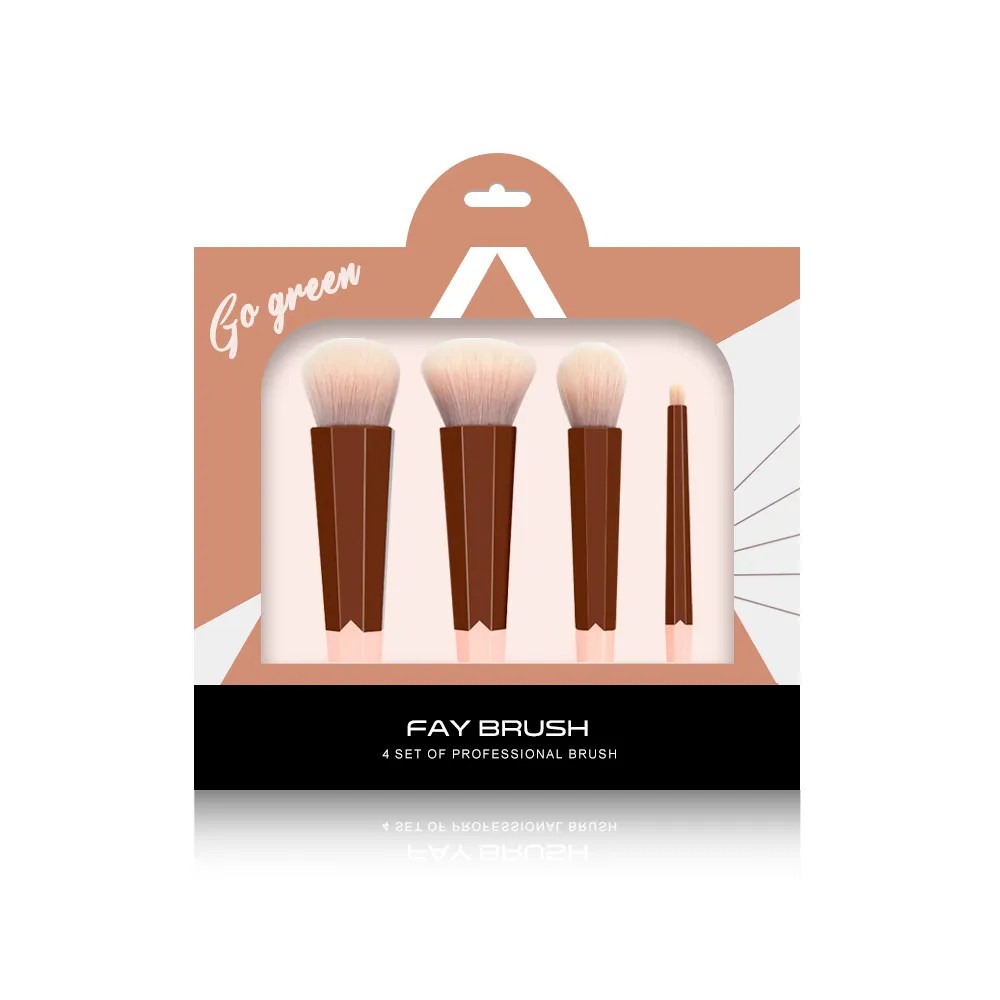
Fay Brush is a Dongguan-based OEM/ODM makeup brush manufacturer with 16+ years of experience, five production facilities, and 100% finished-goods inspection before shipment. We hold ISO9001, SMETA, BSCI, and FSC certifications, operate in the heart of the Guangdong ferrule-and-filament supply cluster, and run the three-tier QC system described above.
What that means against the trends in this article: integrated sourcing, automated production lines, current compliance documentation, and a sampling turnaround measured in days. We do not publish fabricated client counts — we let samples and inspection reports speak.
FAQ
1. What is the typical lead time for a custom makeup brush order in 2026? For a standard custom design at a vertically integrated factory, expect 7–15 days for samples and 30–45 days for production, with rush orders in 20–25 days. Peak-season (Q4) lead times can stretch to 30+ days, so order early.
2. What defect rate should I expect from a quality makeup brush manufacturer? Best-practice factories hold defect rates at or below 0.1% using three-tier QC (IQC/IPQC/QA) and automated optical inspection. The industry average is closer to 1%. Always ask for the specific number.
3. What is the minimum order quantity for custom makeup brushes in 2026? MOQs are falling. Some factories now offer 100-unit minimums for custom designs, though 500–2,000 units per SKU remains common for standard designs. Small-batch custom orders grew ~94% year-over-year as flexible production lines spread.
4. Why does in-house production of bristles, ferrules, and handles matter? Vertically integrated factories (under 8% of the industry) typically achieve 15–20% lower ex-works pricing and shorter, more reliable lead times, because there are no supplier handoffs to delay or mark up the cost.
Ready to Source from a Factory That Has Already Upgraded?
If you are planning a custom brush line and want a partner whose production floor reflects 2026 — not 2015 — let us show you samples and our QC process directly.
Request a Free Sample · Get a Quote · Customize Your Brush
Dongguan Fay Cosmetic Brushes Co., Ltd. — ISO9001 · SMETA · BSCI · FSC certified. 16+ years of OEM/ODM brush manufacturing. 100% finished-goods inspection.
Private Label Makeup Brush Trends 2026
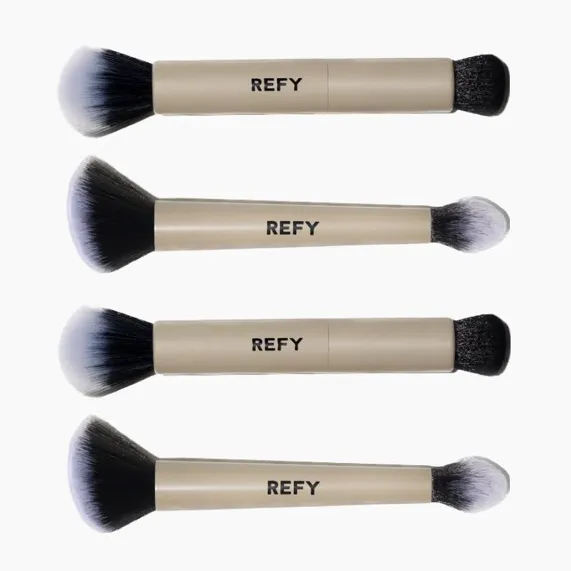
Why REFY Makeup Brushes Are So Popular?
Related Article


CONTACT US

+86 769 81900169

sales@faybrush.com

#172 Huancun Rd, Jinxiaotang Zhutang, Fenggang, Dongguan, 523681 China