
How to Design a Makeup Brush Set: B2B Guide
If you are a beauty brand manager, product developer, or private-label buyer, designing a makeup brush set is one of the highest-leverage decisions you will make for your tools category. The set configuration — how many brushes, which shapes, what handle material, what packaging — determines your unit cost, your retail price point, your shelf appeal, and whether customers actually use every piece or leave half of them collecting dust.
This guide breaks down the full process from a B2B sourcing perspective: which brush types you need, how to size your set for your target retail channel, what margins to expect, and how to brief an OEM/ODM manufacturer so your first production run matches your vision.
1. Start With the End User, Not the Brush Count
The most common mistake beauty brands make when designing a brush set is starting with a number — "we want a 12-piece set" — before defining who the set is for and what makeup routine it should serve.
Every brush in a set should have a clear, distinct functional role tied to a specific step in a makeup routine. Filler brushes that serve no unique purpose dilute perceived value and increase your unit cost without increasing your retail price.
2. The Essential Brush Types Every Set Should Consider
Regardless of set size, nearly all functional makeup brush sets draw from the same core library of brush shapes. Understanding each type's function helps you decide which to include and which to cut.
Face Brushes
| Brush Type | Shape Profile | Primary Function | Bristle Density |
|---|---|---|---|
| Foundation Buffer | Dense, domed or flat-top | Liquid/cream foundation blending | High |
| Kabuki | Short-handle, dense round/flat | Full-coverage buffing, mineral powder | High |
| Powder Brush | Large, fluffy dome | Setting powder, loose powder | Low–Medium |
| Blush Brush | Medium, angled or tapered | Blush application to cheeks | Medium |
| Contour Brush | Small, angled | Sculpting cheekbones, jawline, nose | Medium–High |
| Highlighter Brush | Small, fan or tapered | Highlighter on high points | Low |
| Concealer Brush | Small, flat or tapered | Targeted blemish/under-eye coverage | High |
Eye Brushes
| Brush Type | Shape Profile | Primary Function | Bristle Density |
|---|---|---|---|
| Shader | Flat, medium | Packing color onto lid | High |
| Blending Brush | Fluffy, tapered dome | Diffusing crease color | Low–Medium |
| Crease Brush | Small, tapered | Precise crease depth | Medium |
| Pencil Brush | Tight, pointed | Lower lash line, smudge, detail | High |
| Angled Liner | Fine, angled | Gel/cream eyeliner, brow fill | Firm |
| Spoolie | Spiral bristle | Brow grooming, lash separation | — |
Lip & Brow
| Brush Type | Shape Profile | Primary Function |
|---|---|---|
| Lip Brush | Fine, flat or pointed | Precise lip color application |
| Brow Brush | Firm, angled | Brow powder/pomade application |
3. Set Configuration Tiers: From Starter to Professional
Based on industry benchmarks and retail positioning, here are the four standard set tiers that most beauty brands adopt. Each tier maps to a specific retail price band and target consumer.
Tier 1: The Essential Starter (3–5 Pieces)
Retail Price: 10–20 Target: Beginners, travel sets, entry-level brand launches Typical Configuration:
- Foundation buffer
- Powder brush
- Blush brush
- (Optional) Eyeshadow shader
- (Optional) Blending brush
Why it works: Three brushes — foundation, powder, and blush — handle over 80% of everyday makeup looks. Adding a shader and blender extends the set to basic eye looks without overwhelming beginners. This is the configuration most successful Amazon-first brands start with.
Tier 2: The Standard Pro Set (5–8 Pieces)
Retail Price: 15-30 Target: Enthusiasts, mid-market brands, palette companion sets Typical Configuration (5-piece): Shader, Blender, Crease, Pencil, Angled Liner (eye-focused set) Typical Configuration (8-piece): Add foundation buffer, powder brush, blush brush to the eye set
Why it works: The 5-piece eye set is the single most common hero SKU for independent beauty brands launching an eyeshadow palette. It covers every technique the palette enables — packing, blending, crease depth, smudging, and liner — in one cohesive package. Adding three face brushes creates a complete 8-piece daily kit.
Tier 3: The Complete Collection (10–13 Pieces)
Retail Price: 30-60 Target: Mid-premium positioning (Sephora, Ulta, department stores), holiday gift sets Typical Configuration:
- Large dome powder brush
- Medium dome powder brush
- Domed buffing foundation brush
- Flat-top kabuki foundation brush
- Angled contour brush
- Large eyeshadow shader
- Medium dome blending brush
- Small dome blending brush
- Detail eyeshadow brush
- Small detail brush
- Angled liner/brow brush
- Spoolie
- Flat lip/concealer brush
Why it works: A 13-piece set covers full face and eye application without redundancy. Each brush has a distinct role. At a production cost that supports 60–80% gross margin at mid-premium retail, this is the sweet spot for brands that want a complete, cohesive tools line without requiring additional SKUs to fill gaps.
Tier 4: The Professional Artist Kit (15–20+ Pieces)
Retail Price: 60–100+ Target: Professional MUAs, beauty academies, luxury gifting, prestige brands Typical Configuration: Everything in Tier 3 plus:
- Fan highlighter brush
- Concealer brush
- Second blending brush (different size)
- Fine-point liner brush
- Small dome/fan brush
- Brow spoolie (second)
- Lip brush
Why it works: Professional kits are about having the right tool for every technique — cut creases, precise liner, lower lash line detail, multiple blending sizes. Redundancy is intentional, not wasteful, because professionals use two of the same brush for different colors.
4. Handle, Ferrule, and Packaging: The Details That Define Perceived Value
Brush performance is about bristles, but perceived value — what makes a customer willing to pay 65 instead of 25 — is about everything else.
Handle Material Selection
| Material | Cost Level | Aesthetic |
|---|---|---|
| ABS Plastic | Low | Versatile, custom Pantone colors, gradient finishes |
| FSC-Certified Wood | Medium | Natural grain, premium organic feel |
| Bamboo | Medium | Sustainable, lightweight |
| Aluminum | Medium–High | Weighted, professional feel, metallic finish |
| Acrylic/Resin | High | High-gloss, luxury weight, translucent options |
Ferrule Quality
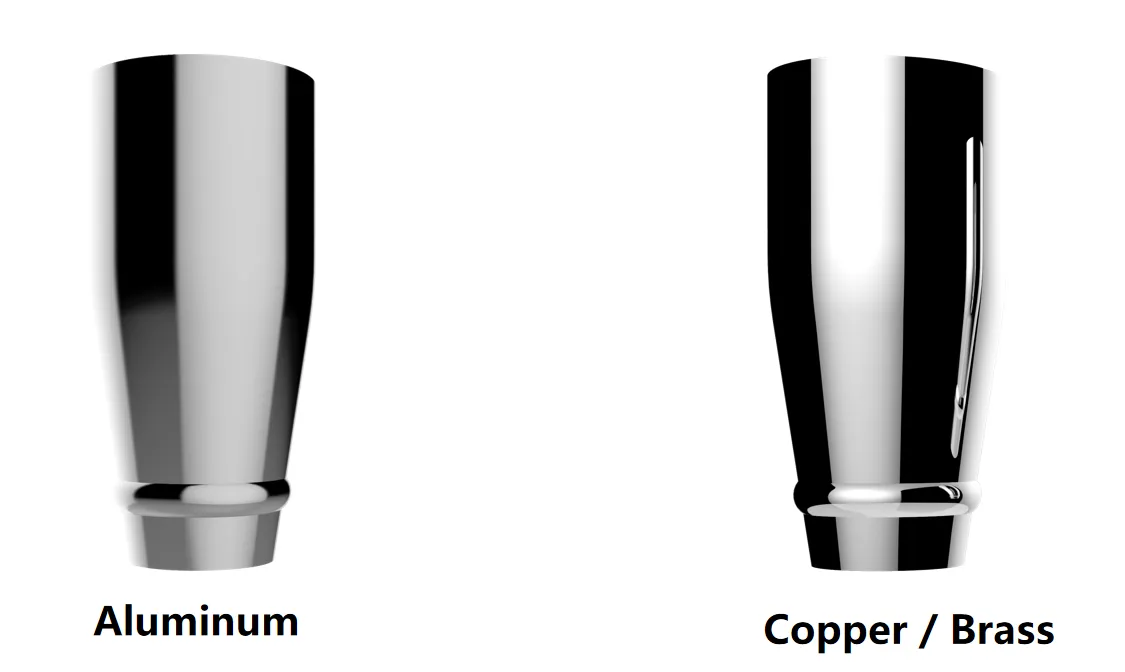
The ferrule is the metal band connecting bristles to handle. There are usually aluminum and copper tubes to choose from. Most makeup brushes on the market are made of aluminum, while high-end ones are made of copper. If your budget allows, you can consider copper tubes, which look more luxurious and feel better in your hand because they are heavier.
Packaging Strategy
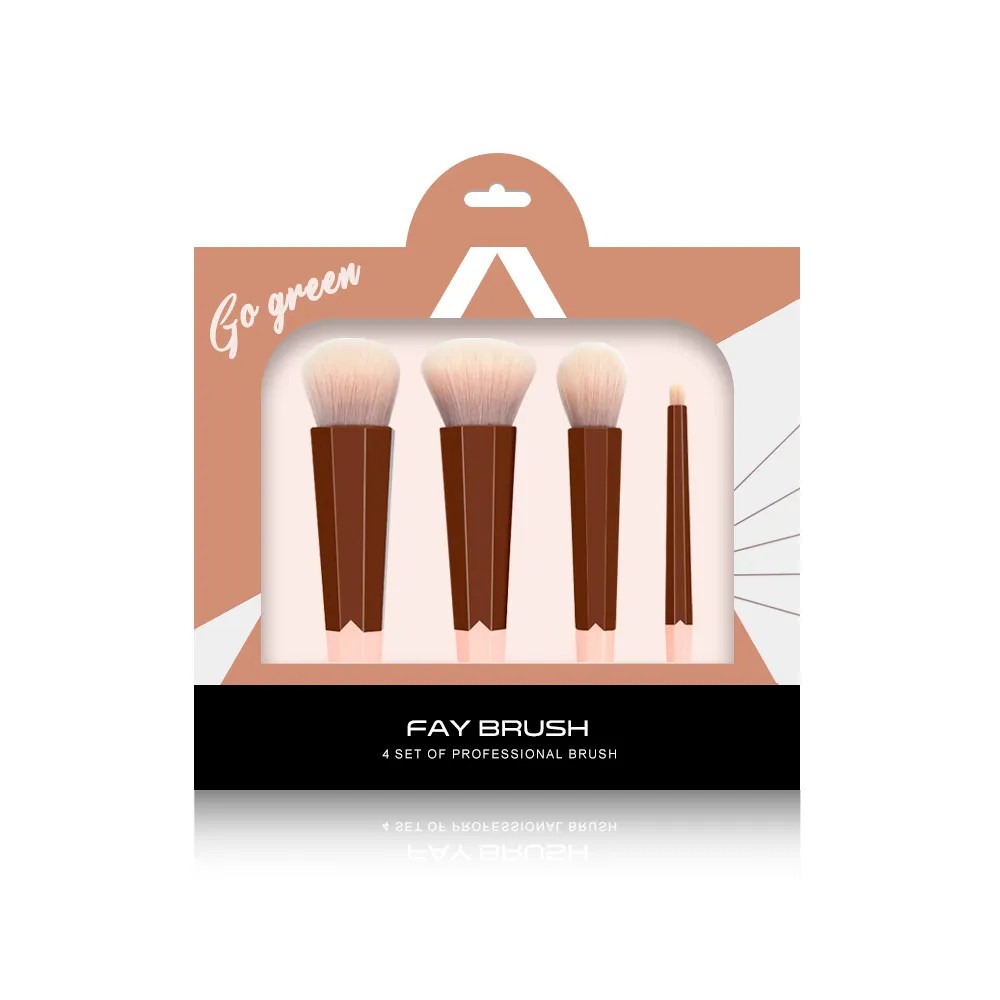
Packaging is not an afterthought — it is often the first thing a customer sees and the last thing they remember.
5. Pricing and Margin Benchmarks
Understanding the cost-to-retail relationship helps you set realistic expectations when briefing a manufacturer. The following benchmarks reflect typical OEM pricing for makeup brush sets manufactured in China.
| Set Tier | Pieces | Est. Unit Cost (FOB China) | Retail Price | Gross Margin |
|---|---|---|---|---|
| Starter | 3–5 | 1.50–3.00 | 10–20 | 50–60% |
| Standard Pro | 5–8 | 3.00–6.00 | 15–30 | 55–65% |
| Complete Collection | 10–13 | 5.00–10.00 | 30–60 | 60–80% |
| Professional Artist | 15–20+ | 10.00–20.00 | 60–100+ | 60–80% |
Frequently Asked Questions
How many brushes should a makeup brush set include?
There is no universal answer — it depends on your target consumer and retail channel. A core set covering face, eye, and lip application typically includes 5–12 pieces. Beginners need only 3–5 versatile brushes. Professional MUAs may require 15–20+ specialized tools. The key principle: every brush should have a clear functional role. Filler brushes that serve no distinct purpose dilute perceived value and increase unit cost without increasing retail price.
What is the minimum order quantity for a custom makeup brush set?
MOQ varies by customization level. Using an existing handle mold library with custom color and logo typically starts at 500 sets. Fully proprietary handle designs or custom packaging may require 1,000–3,000+ sets to amortize tooling costs. Discuss your launch volume openly with your manufacturer early — they can often suggest production programs that fit your scale.
Should I use the same bristle density for all brushes in a set?
No. Different brush functions require different densities. Foundation and concealer brushes need high density for product transfer and coverage. Powder and blending brushes need low-to-medium density for soft, diffused application. Specifying density grade per brush position — rather than one universal density — is what separates a professionally designed set from a generic one.
Can a makeup brush set meet vegan and cruelty-free certification requirements?
Yes. A fully synthetic brush set using engineered PBT or Taklon fibers can meet vegan and cruelty-free standards without compromising performance. Modern synthetic fibers now match or exceed natural hair for powder, liquid, and cream application. Confirm the specific certification standards your target markets require (Leaping Bunny, PETA, Vegan Society) and ensure your manufacturer can provide supporting documentation.
Ready to Design Your Brush Set?
Choosing the right brush types, set size, and manufacturing partner is the foundation of a successful tools category. At Fay Brush, we have been manufacturing custom makeup brush sets for global beauty brands since 2010, with ISO 9001, BSCI, SMETA, and FSC certifications.
Whether you need a 5-piece starter set or a 15-piece professional kit, we can help you configure the right brushes for your product line, specify materials to your quality standard, and deliver production-ready samples in 7–10 working days.
Request a Free Sample | Explore Our Products | Book a Factory Tour
Makeup Brush Quality Inspection Guide: QC Standards & Tests
2026 Makeup Brush Trends: What Beauty Brands Must Know
Related Article


CONTACT US

+86 769 81900169

sales@faybrush.com

#172 Huancun Rd, Jinxiaotang Zhutang, Fenggang, Dongguan, 523681 China